500+ hires across 15+ countries
Your next hire is already in Latin America
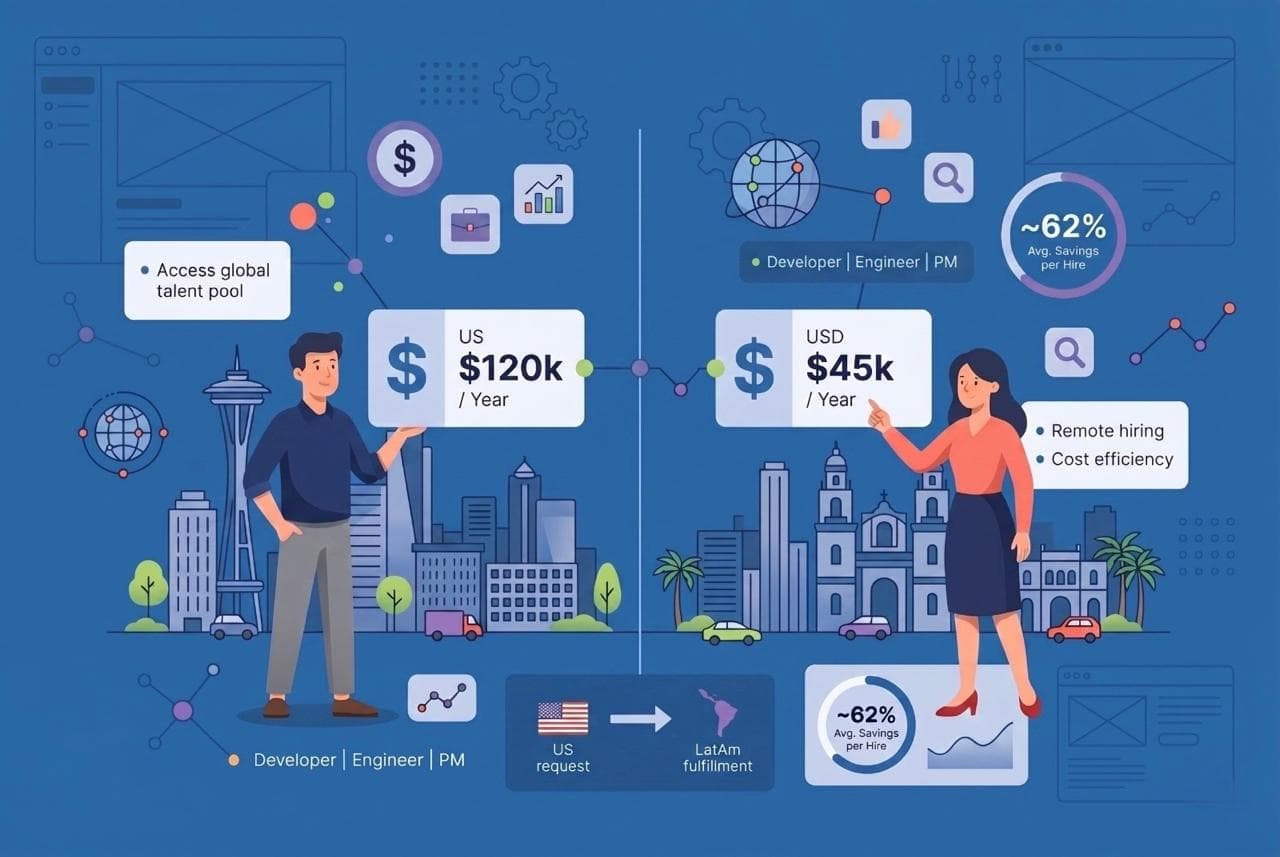
Pre-vetted professionals, placed in under two weeks, at 60% less than local hiring. We handle sourcing, screening, payroll, and compliance.






“I needed a video editor at the last minute — by Thursday at 1 PM, I had someone hired. Super quick and easy.”

Brandon Pourmorady
Founder, Adhesive Media
Trusted by leading companies
































Welcome to RESORSI
Resorsi LLC is a professional staffing company that specializes in hiring and managing talented professionals from Latin America for businesses in the United States.
Our mission is to bridge the gap between companies in the US and the diverse pool of skilled workers in Latin America, while helping businesses save time and resources.
Businesses Served
Candidates Placed
Countries
Client Satisfaction
How It Works
A simple, transparent process from first call to first day.
Tell Us Your Needs
Share your hiring requirements — roles, skills, team size. We tailor a search strategy to your business goals.
We Find Your Match
Our team sources, screens, and presents pre-vetted LATAM professionals who fit your culture and tech stack.
You Hire & Scale
Onboard your new team member in under two weeks. We handle payroll, compliance, and ongoing support.
How Much Could You Save?
Use our Salary Calculator to compare hiring costs in the US vs Latin America. See real savings for specific roles and make informed staffing decisions.
Tailored Solutions for the Modern Workforce
Whether you are looking to build a world-class team or find your next career milestone, Resorsi provides the tools and network to make it happen.
For Employers
Build your dream team with LATAM's finest talent
- Top Tier Talent
- Cost-Effective Hiring
- Efficient Screening
- Transparency
- Guaranteed Candidate Satisfaction
For Candidates
Launch your career with top US companies
- Great Job Opportunities
- Career Growth
- Access to US Market
- Seamless Hiring Process
- Stability
What Our Clients Say
Hear what our clients have to say about working with Resorsi.

“Thanks to Resorsi LLC's expertise in finding and managing Latin American talent, we quickly found the perfect candidate for our assistant property manager position, and are now using their services again to fulfill other job searches. We highly recommend Resorsi LLC to any business looking to expand their talent pool.”
Martin Lede
COO | Resma USA
Why RESORSI
Success starts with the right talent. We connect you with skilled professionals who align with your company's culture and needs, ensuring a collaborative and productive work environment from day one.
Global Reach
We connect U.S. businesses with skilled, cost-effective talent across 15+ Latin American countries.
Proven Model
Global leaders like Accenture, PwC, and JPMorgan invest in and train top LATAM talent at scale.
Expertise First
We ensure your team is equipped to perform from day one with rigorous vetting and cultural alignment.
From the Blog
Insights on remote hiring, LATAM talent, and scaling your team.


Get in Touch
Have questions about how we can help your business scale with top-tier LATAM talent? Reach out to our team today.
Email Us
info@resorsi.com
Call Us
+1 (786) 670-4047
Office
900 N Federal Hwy Suite 300, Hallandale Beach, FL 33009