
LatAm Outsourcing Costs: What US Companies Actually Pay in 2026
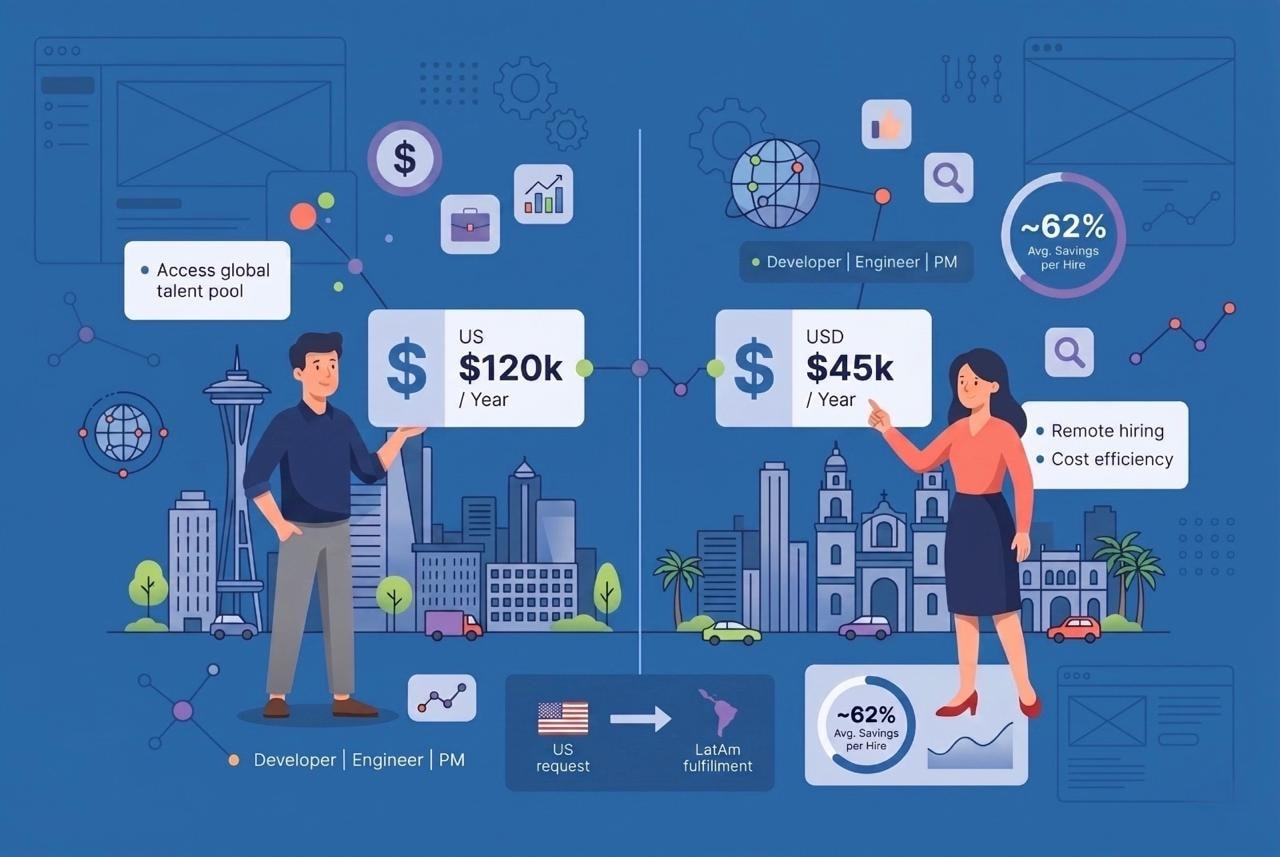
LatAm outsourcing costs are lower than most US hiring managers expect, but the savings aren't the same across every role, country, or seniority level.
Here's what the numbers actually look like in 2026.

These aren't theoretical ranges. These are numbers from placements we've made in the last 12 months.
Why the Gap Exists. And Why It Won't Close Anytime Soon
LatAm salaries are set by local markets. A senior developer in Bogotá earns well above the local average at $55K/year. In Austin, the same profile is underpaid at $130K.
The arbitrage window is real. It exists because of purchasing power parity, not because LatAm talent is inferior.
Three countries driving the most cost-effective senior placements right now: Argentina, Colombia, Mexico.
What Hidden Costs US Companies Miss
The sticker price isn't the full picture. Add these to your model:
Contractor vs. employee structure: Most LatAm hires are contractors, which eliminates payroll taxes, benefits overhead, and PTO accrual. That's typically 25–35% savings on top of the base rate difference.
Time zone overlap: Colombia, Mexico, and Argentina all have 1–3 hour overlap with US Eastern time. Async gaps are minimal.
Onboarding time: LatAm professionals trained on US tools (HubSpot, Salesforce, Asana, Notion) are ready in days, not weeks.
The One Number That Matters
One ops hire at $27K instead of $72K puts $45,000 back in your budget. Most companies reinvest that into a second LatAm hire within 90 days. That's how a single decision becomes a structural cost advantage, not a one-time saving.