
How to Hire a Nearshore Bookkeeping Team in Latin America
Hiring a nearshore bookkeeping team in Latin America gives you access to CPA-trained accounting professionals at 40–60% of U.S. rates, with full timezone overlap and English proficiency that offshore alternatives rarely match.
This isn't new for large companies. JPMorgan, Citigroup, and dozens of Fortune 500 firms have built finance operations in Colombia, Argentina, and Mexico. For mid-sized U.S. businesses, the same model is now accessible through nearshore staffing.
What a Nearshore Bookkeeping Team Actually Handles
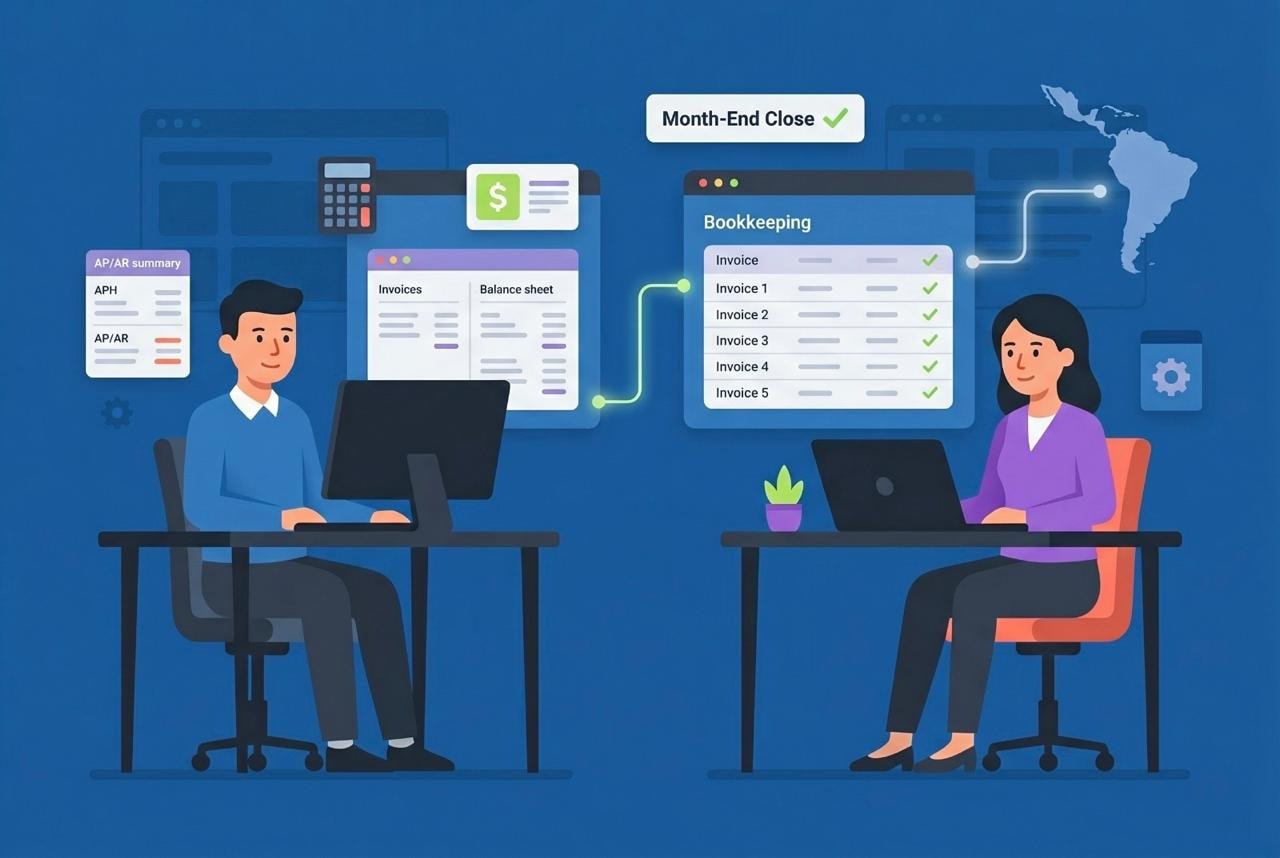
A nearshore bookkeeping team in Latin America owns the execution layer of your finance function: accounts payable, accounts receivable, bank reconciliations, month-end close, expense categorization, and payroll processing.
Your U.S.-based Controller or CFO keeps strategic ownership, reporting, compliance, vendor decisions. The LATAM team handles the volume work that's consuming their time.
What to Look For Before You Hire
Accounting software proficiency. Your team should arrive trained in QuickBooks, NetSuite, or Xero, whatever you use. Confirm before interviewing, not after.
CPA-adjacent credentials. In Colombia, Argentina, and Mexico, a Contador Público has 5 years of university-level accounting training. These aren't entry-level hires.
B2+ English minimum. U.S. accounting workflows require solid written English, for invoices, vendor communication, and internal reporting. Test this early.
Timezone fit. Colombia and Mexico overlap fully with EST/CST. Argentina covers U.S. morning hours. Confirm overlap matches your team's working rhythm before committing to a country.
What It Costs
A trained bookkeeper in Latin America typically runs $1,200–$2,200/month fully loaded through a nearshore staffing firm. A senior accountant runs $2,500–$4,000/month. U.S. equivalents cost $5,000–$9,000/month. The quality gap has narrowed, the cost gap hasn't.