
The AI Skills Your Next LatAm Hire Should Have
The resume sitting in your inbox looks great. Five years of experience, the right degree, tools that match your job description. But in 2026, that's only half the picture.
Hiring has changed. The skills that made someone a strong candidate in 2020 are not the only skills that make someone exceptional today. Most hiring managers haven't updated the filter yet. Here is what needs to be added.
Experience Still Matters. But It's No Longer Enough on Its Own.
Experience brings context, pattern recognition, and judgment. That doesn't go away. What has changed is that experience alone no longer guarantees performance. A professional with strong fundamentals who has genuinely integrated AI into how they work can now operate at a level that wasn't possible before. The best hires today bring experience AND adaptability.
The Four Skills That Define the Best Hires Right Now
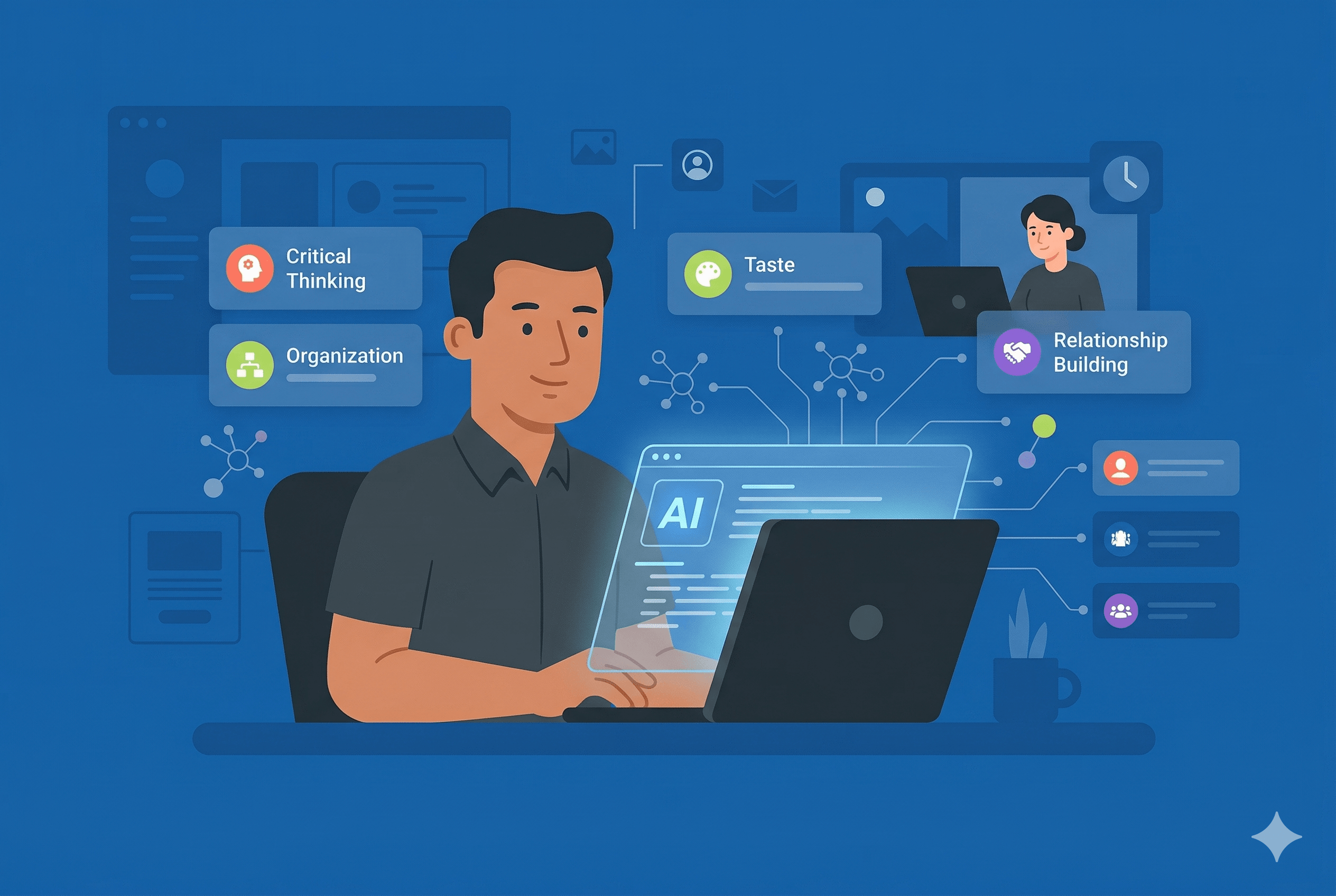
Critical Thinking. Can they sit with an ambiguous problem and reason through it without hand-holding? Paired with AI, this produces someone who uses tools to stress-test their own conclusions, not outsource thinking entirely.
Organization Skills. Speed without structure is chaos. A highly organized person with the right AI tools can now do the work of a two-person team. When hiring remotely from Latin America, this skill determines whether the time zone gap becomes a feature or a liability.
Taste. AI can generate ten options in five minutes. The question is whether your hire can pick the right one. You cannot train taste. When you find a candidate who has it, you've found something worth holding onto.
Relationship Building. Remote work doesn't fail because of technology. It fails because of trust. LatAm professionals have a structural advantage here, the culture places real emphasis on interpersonal connection. Their team members invest in the relationship, not just the deliverable.
Why LatAm Professionals Are Particularly Well-Positioned
LatAm professionals have operated with leaner tools, smaller teams, and higher ambiguity. That builds exactly the muscles that matter most now. Add globally accessible AI tools and the hunger to apply them, and you have a candidate profile that's becoming impossible to ignore.
How to Spot These Skills in an Interview
- "Tell me about a time you disagreed with how something was being done. What did you do?"
- "Walk me through how you manage a week when three priorities compete and one shifts midway."
- "Share a piece of work you're proud of and explain what makes it good."
- "Give me an example of how you've used AI recently. What would you do differently?"
The companies that hire for this now will have an unfair advantage. The question is whether you're on the right side of it.