
Outsourcing KPIs for LATAM Hires: How to Know It Is Working
Most companies tracking outsourcing KPIs for LATAM hires measure the wrong thing: hours logged, online status, and a vague sense of performance.
When the right metrics are in place, performance becomes obvious: you know within weeks whether a hire is on track, and the weekly check-in turns into a short review of numbers instead of a status meeting.
The 6 Outsourcing KPIs That Actually Matter
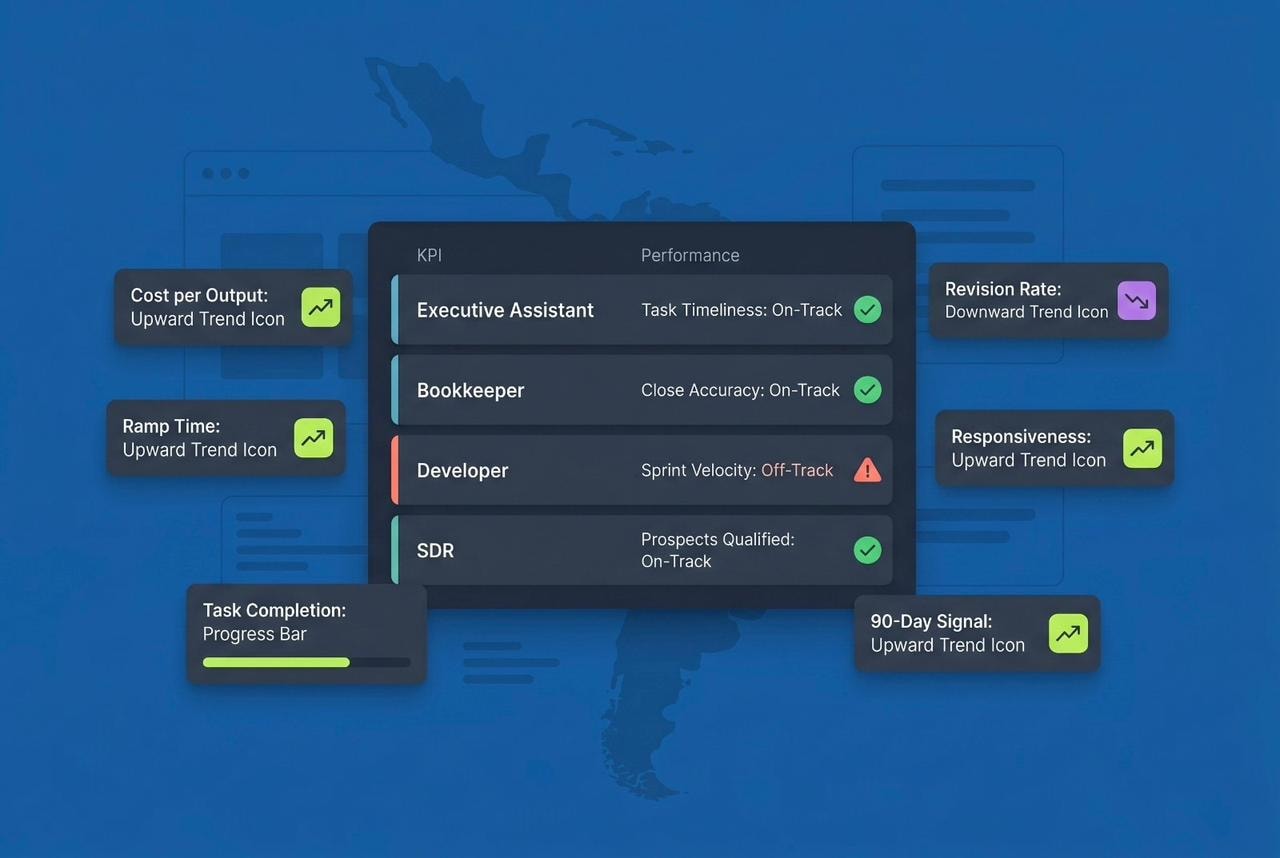
Outsourcing KPIs for LATAM hires only work if they measure output, not activity. Here are the six to track:
- Cost per output unit. Total monthly cost divided by output volume: invoices processed, tasks closed, tickets resolved. If this number is not improving by month three, redefine the role before blaming the hire.
- Ramp time to full productivity. A reasonable target to start with: 2 to 4 weeks for ops and admin roles, 4 to 6 weeks for technical roles. If someone reaches month two and still needs daily hand-holding, the issue is usually onboarding structure, not the hire.
- Task completion rate. Track it over a rolling 30 days. Below 80% is a flag. Below 60% means something is structurally broken.
- Revision rate. For creative, copy, finance, or legal work: how often does output come back for revision? One revision cycle is normal. Three is a signal. Track it by role type, not just by person.
- Communication responsiveness. Response time within agreed hours. For most LATAM hires, a same-day response to Slack or email is the baseline. Consistent lag is an early warning sign that the workload is wrong or the hire is stretched across too many priorities.
- 90-day retention signal. Are they asking questions and pushing back when something seems off? Passive hires are the ones most likely to leave at month four or five.
Set these before the first day, ideally as part of a nearshore hiring pilot phase.
Suggested Targets by Role
These are starting points to adjust to your team, not measured benchmarks.
- Executive assistant: Suggested target: 85% or more of tasks done on time
- Bookkeeper: Suggested target: Zero material errors
- Developer: Suggested target: Matches the team's average sprint velocity
- SDR: Suggested target: 8 to 12 qualified meetings per month
The Real Problem Most Companies Have
You cannot measure a hire without measuring the system around them. Many underperforming placements are not talent failures. They come from unclear scope, no feedback loop, or tasks that do not match the role description. Run the KPIs on the whole system, not just the person, and screen for the right behaviors up front with competency-based hiring. To set KPIs for a new hire, contact Resorsi.