
Remote Legal Assistants for Small Law Firms
Remote legal assistants for small law firms solve the capacity problem that most firms under 50 people face: attorneys buried in admin work with no budget for full-time local hires.
What Remote Legal Assistants Handle
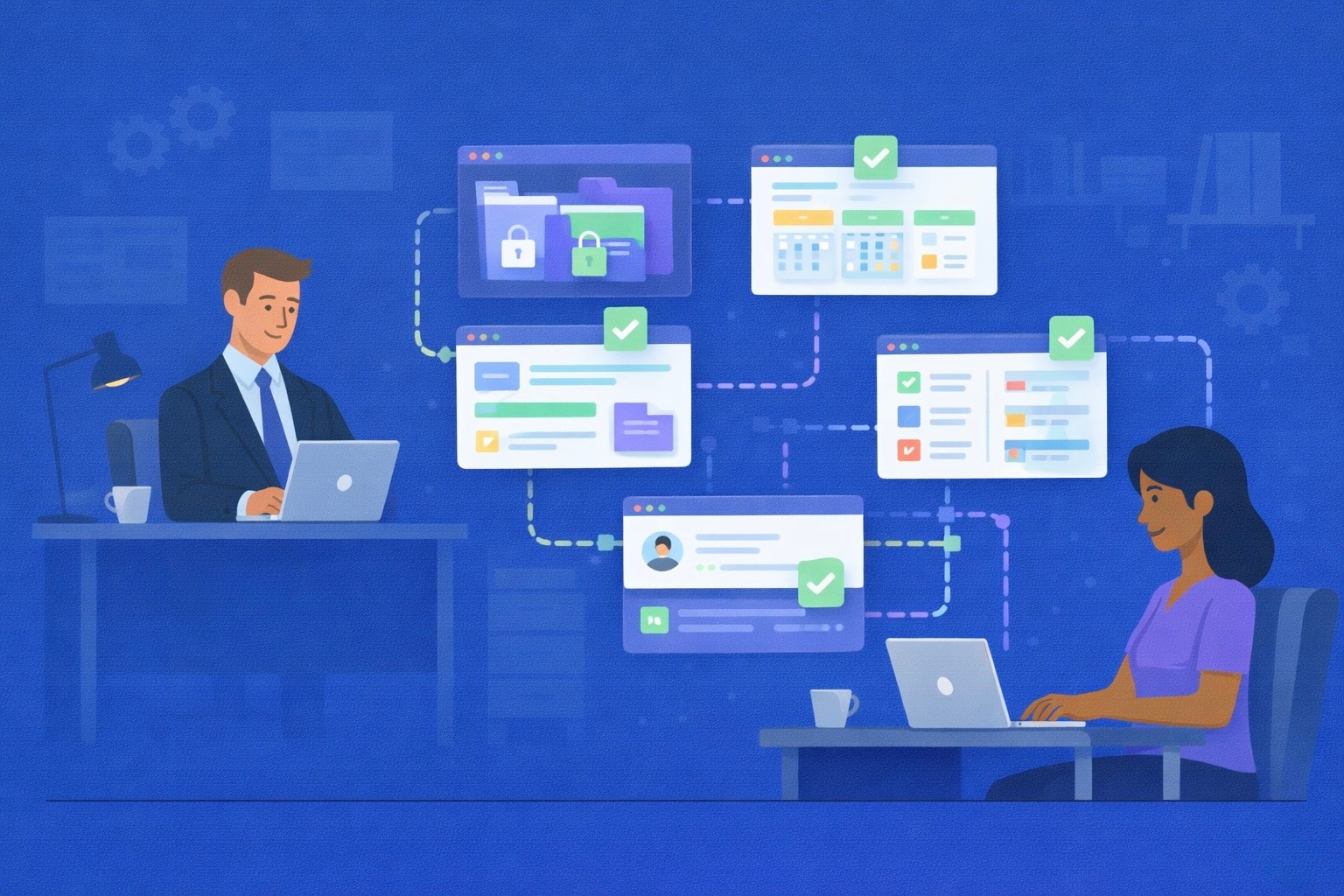
Remote legal assistants for small law firms handle operational work, not legal work: intake coordination, document preparation, calendar management, client follow-ups, filing, and case management system updates. For immigration-focused firms, that extends to form preparation (I-130, I-485, I-765, N-400) and USCIS portal monitoring.
For real estate practices, remote assistants handle lease drafting support, closing coordination, title follow-ups, and due diligence scheduling. Litigation firms use them for docket management, discovery response support, and post-hearing documentation.
Why Latin America
Many Latin American legal professionals hold law degrees in their home countries and have moved into paralegal and legal assistant roles for US firms. They understand legal workflows, terminology, and the precision these roles demand.
On cost, the median US paralegal earns $62,890 a year, about $5,240 a month (BLS, May 2025). A qualified remote legal assistant from Latin America typically runs $1,800 to $3,000 a month, depending on seniority. In a direct hire, Resorsi charges a one-time placement fee of 20% of the first-year salary.
What the Rules Say
Remote legal staffing is allowed, with conditions. ABA Formal Opinion 08-451 (ABA Journal summary) says a lawyer may outsource legal or nonlegal support as long as the lawyer:
- stays responsible for competent representation (Rule 1.1);
- supervises the people doing the work (Rules 5.1 and 5.3);
- tells the client and gets consent if the provider will receive confidential client information (Rule 1.6);
- charges reasonable fees (Rule 1.5); and
- does not help anyone practice law without authorization (Rule 5.5).
In practice that means the work stays inside the firm's case management system, no client files sit on personal devices, and no unsanctioned cloud storage is used. Check your state bar's own rules as well, since the ABA opinion is advisory. For the employment side, see 5 legal mistakes U.S. companies make when hiring in Latin America.
Screen for Case Management Fluency
A staffing partner that screens for case management fluency (Clio, MyCase, PracticePanther, Filevine) removes the onboarding gap that makes most remote hires risky for small firms. For what that screen looks like, see how to hire a remote paralegal for your Clio law firm. To start a search, contact Resorsi.